These pictures were taken within the last two weeks. I have learned to appreciate good photographic subjects in flowers. As usual, human activities are the primary focus of my photo acts.
CHAPTER ONE Physical Characteristics and Demography of Gingoog Geography. The city is located in the northeastern coast of Misamis Oriental, 122 kilometers east of Cagayan de Oro and 74 kilometers west of Butuan City . It is bounded to the east by the municipality of Magsaysay and the province of Agusan del Norte , to the south by Bukidnon; to the west by the municipalities of Claveria and Medina , Misamis Oriental, and to the north by Gingoog Bay . The total land area of Gingoog City is 769.88 square kilometers or 76,988 hectares. The total land area where improvements were built up by people is 1,796.97 hectares agricultural production area is 28,680.51 hectares, while the forest production area is 11,890.00 while the forest protected area is 28,500.65 hectares. Climate Gingoog has a Type 2 climate, which means that it has no distinct dry season. Rainfall occurs during the months of September to February. The average temperature is 27 degrees to 32 degrees on t...
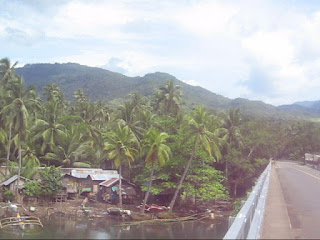
Odiongan is an old settlement datring porobably to the 15th century. THe Recollect missionaries were here in the 17th century but left no major buildings as proof. They just established a chapel and left after a few years, may be due to the hostility of the natives. Old Spanish maps indicate it as Oyungan. Odiongan is named after the large sea shell called locally as bodyong. The shell is made into a bodyong or improvised horn to call members of the tribe for a meeting with the Datu. The Datu is a tribal leader who oversees the affairs of the tribe. Datu Odyong was one such legendary figure after which Odiongan was named after. Odiongan River is also the largest river in Gingoog City. It may also be the longest. Its source is at Mt. Lumot, near Mt. Balatukan. The mouth of Odiongan River was once a thriving community of fishermen, Boholano and Chines traders. In the olden times ceremonies were conducted by Baylan to appease the spirit of the river, which claims lives every year. Food an...
CHAPTER ONE Physical Characteristics and Demography of Gingoog Geography. The city is located in the northeastern coast of Misamis Oriental, 122 kilometers east of Cagayan de Oro and 74 kilometers west of Butuan City . It is bounded to the east by the municipality of Magsaysay and the province of Agusan del Norte , to the south by Bukidnon; to the west by the municipalities of Claveria and Medina , Misamis Oriental, and to the north by Gingoog Bay . The total land area of Gingoog City is 769.88 square kilometers or 76,988 hectares. The total land area where improvements were built up by people is 1,796.97 hectares agricultural production area is 28,680.51 hectares, while the forest production area is 11,890.00 while the forest protected area is 28,500.65 hectares. Climate Gingoog has a Type 2 climate, which means that it has no distinct dry season. Rainfall occurs during the months of September to February. The average temperature is 27 degrees to 32 degree...



Comments